
I lost half a chilli plant to mealybugs before I took neem oil spray seriously, and once I started using it I made a different mistake: spraying at midday in Pune's summer sun and scorching the leaves I was trying to save. Here's the dilution I actually use, the timing that stops leaf burn, and the one caution (a monsoon-humidity caveat) I searched for and could not find a real source for, so I'm not including it.
Asha Iyer
I garden on a Pune balcony, mostly in containers, mostly in whatever pot I already own. My first tomato crop died in a self-watering pot I didn't understand, so I write for people gardening in rented flats with awkward light and a real monsoon. I won't recommend gear a bucket already does.
My Garden Journal
Neem Oil Spray for Balcony Pot Pests (India): Dilution, Timing, and What I Skip
I lost about half a chilli plant to mealybugs before I started taking neem oil seriously as a balcony spray. I'd heard about it for years, the way most Indian home gardeners have, but I treated it as a vague folk remedy rather than something with an actual mechanism and a right and wrong way to use it. Once I did start spraying regularly, I made a different, more embarrassing mistake: I sprayed at midday, under full Pune summer sun, and scorched leaves on a plant that was otherwise recovering. Here's what I've actually verified about neem oil, not just repeated.
What Neem Oil Actually Does
The active compound in neem oil is azadirachtin, extracted from the seeds of the neem tree (Azadirachta indica). According to Wikipedia's entry on azadirachtin, it works as an insect growth regulator: it disrupts the hormones insects use to move through their life cycle (their ecdysteroid and juvenile hormone pathways), which blocks pupation, and it also acts as an antifeedant, meaning it disrupts an insect's sense of smell and taste enough that it stops feeding on the sprayed leaf. It also interferes with insect reproduction. This is genuinely different from a contact pesticide that kills on the spot; neem oil works more slowly, by disrupting a pest's life cycle rather than knocking it out immediately, which is one reason people who expect instant results sometimes give up on it too early.
The NPIC (National Pesticide Information Center, a US EPA and Oregon State University cooperative program) fact sheet on neem oil backs this up and adds a detail I find genuinely useful for planning a spray schedule: azadirachtin's half-life on plant leaves is only 1 to 2.5 days. In plain terms, it breaks down fast once it's on the leaf, so a single spray is not a one-and-done treatment. This matches the reapplication schedule I actually use (below), and it's not a number I'd have guessed on my own.
Is It Safe to Use Around People and Pets?
The same NPIC fact sheet states neem oil is "practically non-toxic to birds, mammals, bees and plants" when used according to label directions, though it is slightly toxic to fish and other aquatic life, so I don't let runoff go anywhere near a pond or aquarium setup. One caution worth taking seriously: NPIC also notes that azadirachtin itself "can be very irritating to the skin and stomach." I wear gloves when I mix and spray, and I keep the diluted spray bottle clearly labelled and out of reach the same way I would any other chemical, even though it's plant-derived and generally low-risk.
The Dilution I Actually Use
For a small balcony sprayer, the ratio I follow (drawn from UF/IFAS Extension's guidance, not something I invented) is 1 to 2 teaspoons of neem oil per quart (roughly one litre) of water, with a few drops of a mild liquid soap added as an emulsifier so the oil actually mixes into the water instead of floating on top. I shake the bottle before every use, not just once at mixing time, because the oil separates out again within a few minutes of sitting still.
If you've never used neem oil on a particular plant before, the same UF/IFAS source recommends testing it on a small area first and watching for a day before spraying the whole plant. I've adopted this as a habit after the leaf-scorch mistake below; it costs nothing and it would have caught my own error before it spread to the whole plant.
The Mistake: Spraying in Midday Heat
This is the part that actually cost me leaves, so I want to be specific about it. I sprayed neem oil on a stressed chilli plant at around midday, in direct Pune summer sun, and several leaves developed brown, crisp patches within a day. At the time I assumed I'd simply mixed it too strong.
Reading a University of Nevada Reno Extension publication on horticultural oils afterward, I found the real explanation. It names neem explicitly as an example of a plant-based horticultural oil, and states that plant-based oils "may burn plants more readily (phytotoxicity)" than more refined petroleum-based horticultural oils. The same source lists "should not be used during temperatures in the 90s [Fahrenheit, roughly 32°C and up]" as a specific caution. Pune's summer afternoons routinely clear that easily. Separately, the UF/IFAS Extension source above recommends applying "in the early morning or late evening to avoid leaf burn caused by direct sunlight," which lines up with the heat caution even though it's phrased around sun rather than temperature specifically. I now spray only early morning or after sunset, never in the heat of the day, and I have not had a repeat of the leaf scorch since.
How Often I Spray
Following UF/IFAS's guidance, I spray roughly every 7 to 14 days as a preventive measure on pots that have had pest problems before, and every 4 to 7 days if I'm actively fighting an infestation like mealybugs or spider mites. Given azadirachtin's short 1 to 2.5 day half-life on the leaf (per the NPIC figure above), a single spray genuinely doesn't carry a plant through two weeks on its own; the repeat schedule is doing real work, not just being cautious.
What I'm Leaving Out On Purpose
Plenty of home-gardening advice pairs neem oil warnings with a caution about spraying during India's monsoon humidity, on the theory that trapped moisture on the leaf plus an oil coating encourages fungal growth. I want to be honest that I went looking for an actual source for this specific claim, not just repeated advice, and across several searches I could not find one. What I did find (the Nevada Extension source above) discusses horticultural oils being used to help prevent certain fungal diseases, which is not the same claim and does not support it either way. Rather than repeat a caution I can't back up, I'm leaving it out. If you spray during the monsoon, my only source-backed advice is the same as any other season: early morning or evening, never in trapped midday heat, and not right before rain is expected to wash it off before it's had time to work.
Pests I've Actually Used This On
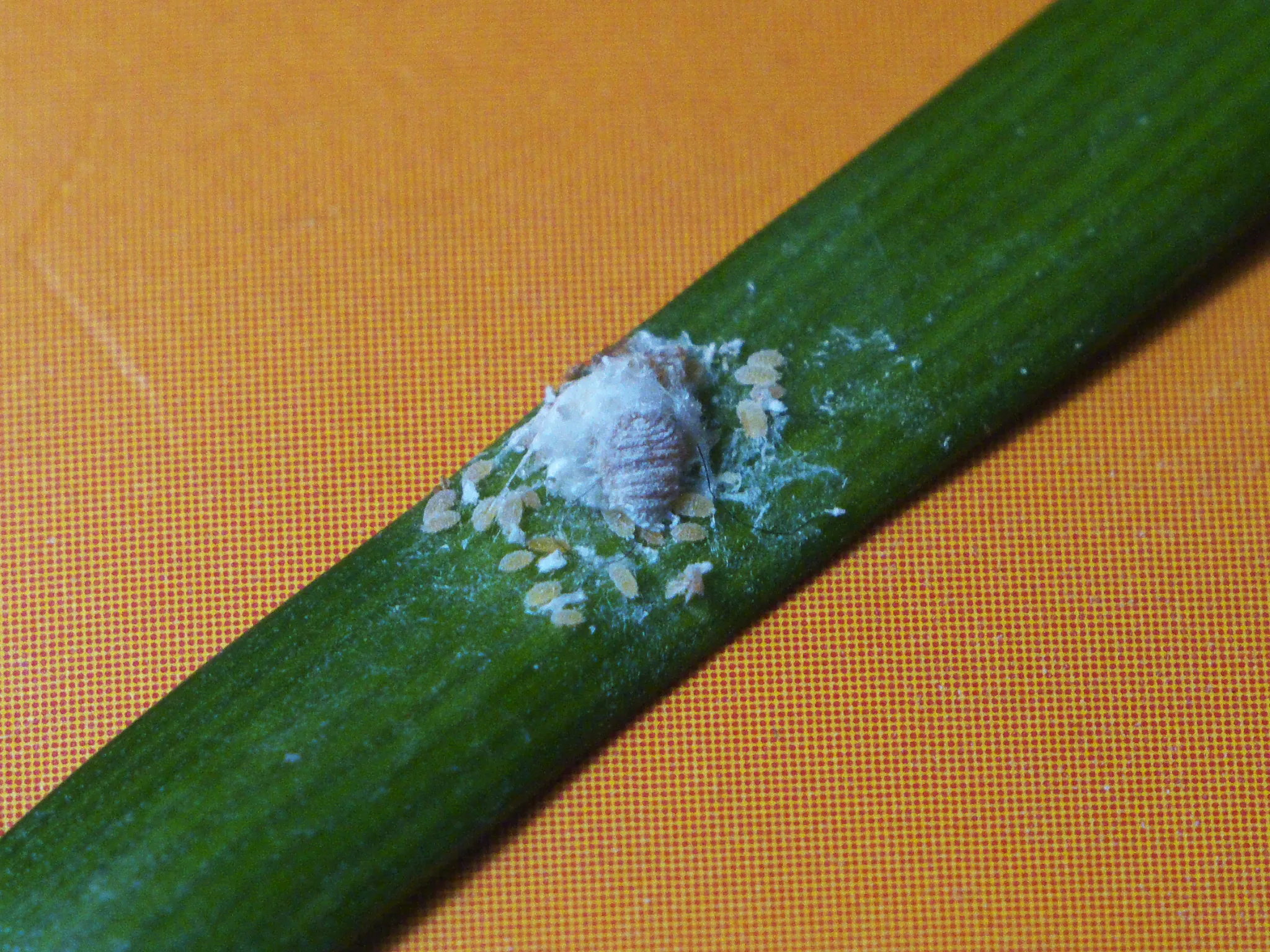
On my own balcony, I've used a neem oil spray on mealybugs (the fuzzy white clusters that show up in leaf joints) and on the beginning of a spider mite problem (fine webbing and stippled, pale leaves), including on my curry leaf plant, which gets watered often enough that it also picks up hard-water residue. If you see a white or grey film on a leaf and aren't sure whether it's mineral crust from hard tap water or a pest issue, mineral crust wipes off dry as a dusty film and doesn't come back within a day or two the way an active pest infestation does; a fresh neem spray followed by fast regrowth of the same fuzzy patches means it's pests, not water.
Crowded pots seem to make pest problems worse on my balcony generally, which is one more reason I follow my own advice on not oversizing or overcrowding containers; more airflow between pots seems to slow how fast an infestation spreads from one plant to the next, though that's an observation from my own balcony, not something I've verified against a source this session.
FAQ
Does neem oil kill pests instantly?
No. According to Wikipedia's entry on azadirachtin, neem oil works by disrupting an insect's hormones and feeding behaviour rather than killing on contact, so it works over days, not minutes. Expect a gradual decline in the pest population over a week or two of consistent spraying, not an instant knockdown.
What's a safe dilution ratio for neem oil at home?
The ratio I use, based on UF/IFAS Extension guidance, is 1 to 2 teaspoons of neem oil per quart (about a litre) of water, with a few drops of mild liquid soap to help it emulsify. Test on a small area first before spraying an entire plant.
Why did neem oil burn my plant's leaves?
In my own case, and per a University of Nevada Reno Extension publication on horticultural oils, plant-based oils like neem can cause leaf burn (phytotoxicity) more readily than refined oils, especially in temperatures above roughly 32°C. Spraying in direct midday heat is the most likely cause. Switch to early morning or evening applications.
Is neem oil safe for pets and beneficial insects like bees?
Per the NPIC (National Pesticide Information Center) fact sheet, neem oil is "practically non-toxic to birds, mammals, bees and plants" when used as labelled, though it is slightly toxic to fish and aquatic life, so avoid runoff near water features. Undiluted azadirachtin can irritate skin and stomach, so I wear gloves when mixing and spraying.
Should I avoid neem oil during the monsoon?
I looked for a specific source on monsoon humidity and neem oil and did not find one I trust enough to state as fact, so I'm not asserting a monsoon-specific rule here. The general, source-backed advice still applies year-round: spray early morning or evening, never in trapped midday heat.
Related Topics
Share This Guide
Related Guides
Continue learning with these related guides