
My tulsi plant used to throw up flower spikes every few weeks, and for the first year I left them alone because they looked pretty. Then I read why basil growers pinch them off, and realised I'd been quietly ending my own leaf harvest every single time. Here's the actual trade-off: pinching keeps the plant leafy and productive for longer, but tulsi is grown in most Indian homes specifically for the flowering top too (for daily puja), so the 'correct' basil-growing advice and the reason you probably planted this in the first place can genuinely pull in opposite directions.
Asha Iyer
I garden on a Pune balcony, mostly in containers, mostly in whatever pot I already own. My first tomato crop died in a self-watering pot I didn't understand, so I write for people gardening in rented flats with awkward light and a real monsoon. I won't recommend gear a bucket already does.
My Garden Journal
Tulsi (Holy Basil) in a Balcony Pot: The Flowering Trade-off Nobody Warns You About
Tulsi (Ocimum tenuiflorum, also called holy basil) is one of the easiest plants on my balcony. It roots readily from a cutting, tolerates the odd missed watering better than my curry leaf ever has, and it's fast: from a small nursery seedling I usually have a full, bushy plant within two or three months. What took me longer to understand wasn't how to keep it alive. It was what to do about the flowers.
Why Tulsi Keeps Sending Up Flower Spikes
Left alone, a healthy tulsi plant will keep pushing up thin flower spikes (called manjari) topped with small purplish flowers on and off through most of the warm months. For the first year I grew tulsi, I just let this happen because the spikes looked attractive and I didn't know there was a decision to make.
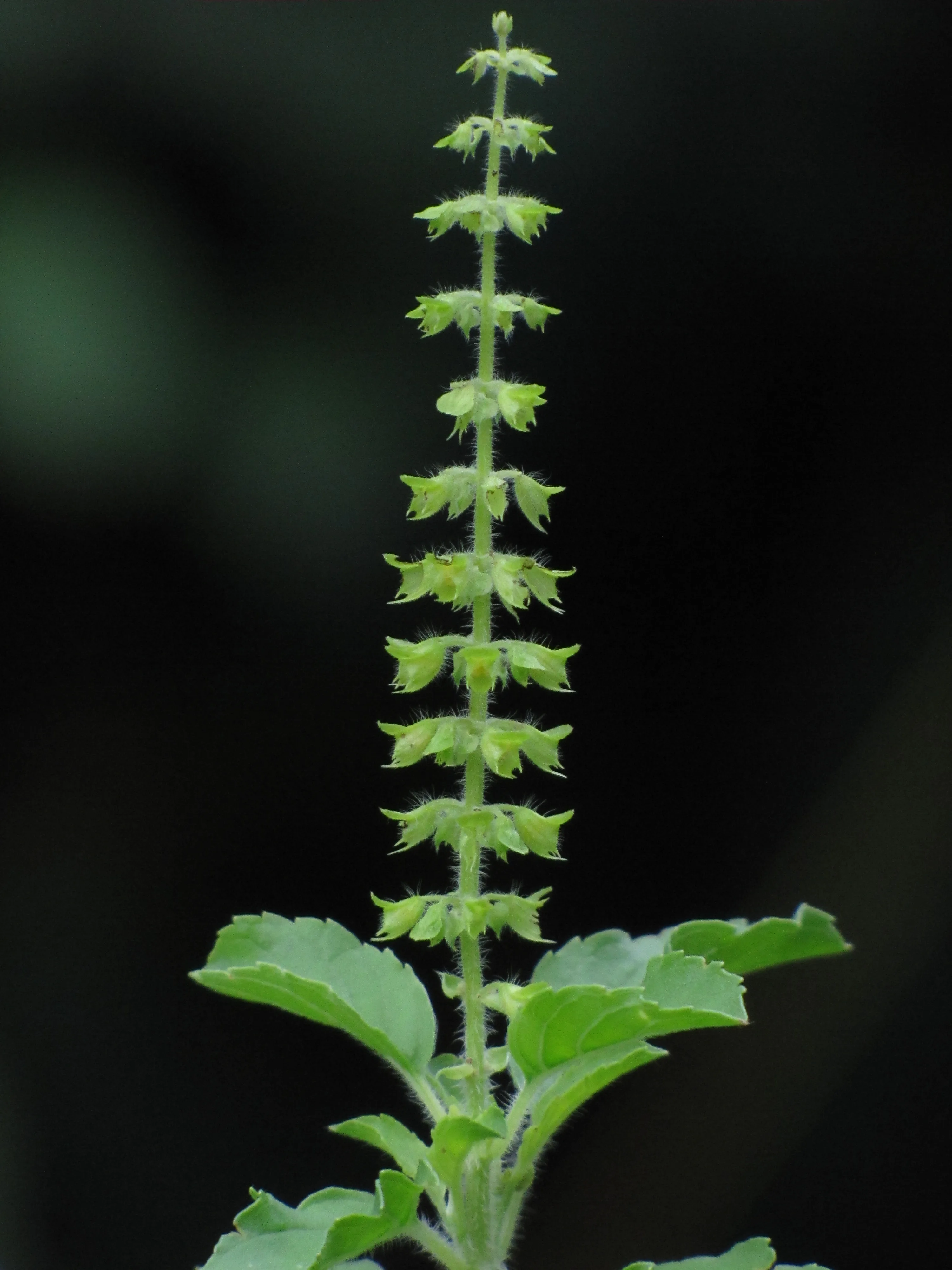
Tulsi is in the same genus (Ocimum) as the culinary basil most gardening advice is written about, and the general basil-growing mechanism is well documented. According to the Royal Horticultural Society's guide to growing basil, removing flower stems as soon as they appear helps "delay this and maintain leaf quality for as long as possible," and the same guide notes that a plant that's allowed to flower more will bring the useful leaf harvest to an end sooner. I want to be direct about a gap here: that RHS source is written about the Ocimum genus generally (culinary sweet basil), not tulsi (Ocimum tenuiflorum) specifically, and I haven't found a tulsi-specific study measuring the same effect. I'm applying a general, sourced genus-level mechanism to my own tulsi plant based on what I've watched happen in my own pots, and I want to say so plainly rather than borrow the RHS's authority for a tulsi-specific claim it doesn't actually make. What I can say honestly: on my balcony, a tulsi plant that's flowering heavily does slow down on putting out the soft new leaf growth I actually want to pick, which matches what the RHS describes for the wider genus.
One thing I will not claim: I have not read a source, this session or before, that shows unchecked flowering exhausts or kills a tulsi plant. An earlier draft of this guide said that, and I dropped it because I couldn't back it up. What's actually supported is narrower and less dramatic: flowering slows and eventually ends your leaf harvest for that flush, not that it threatens the plant's life.
The Part That Complicates the "Just Pinch It" Advice
Here's where tulsi stops being a simple basil-growing question. In most Indian households I know, tulsi isn't grown purely as a cooking herb, it's grown for daily plucking for puja (worship). According to Wikipedia's overview of the plant, tulsi holds a central place in Hindu households and temple courtyards, associated with practices like daily lamp-lighting at the plant and the ceremony of Tulasi Vivaha. In my own home, growing up, a few leaves were picked from the tulsi plant most mornings, and the flowering top was often the specific part people wanted, not the part removed. I'm separating these two threads deliberately: the general cultural practice above is something I read and can point to; the specific detail of which leaves my own family plucked and when is my own household's habit, not a claim about how every Indian household does it.
So the "correct" basil-growing move (pinch the flower spike the moment it appears, to keep leaf production going) sits in real tension with a common reason people grow tulsi at all (wanting the flowering top present, not removed). Neither choice is wrong. It depends on what you actually want from your plant:
- Pinch the spikes as soon as they form if what you want most is a steady, bushy supply of leaves for tea or cooking. This is the straightforward "extend the harvest" choice, and it's the one most basil-growing advice defaults to because most basil-growing advice is written for cooks, not for a plant grown partly for its flowers.
- Let some spikes flower if the flowering top matters to you, whether for daily puja, for the fragrance, or simply because you like watching it bloom. You'll get fewer new leaves in that flush, but you won't be removing the part of the plant some households grow it for in the first place.
What I actually do: I let one or two stems flower at a time (usually whichever stem is already furthest along) and pinch the spikes off the rest. It's not a scientifically optimised split, it's just the compromise that's worked for one household on one Pune balcony.
Watering: The One Way I've Nearly Lost This Plant
Unlike curry leaf, which I've written about as slow and forgiving of a missed watering, tulsi is soft-stemmed and fast-growing, and that combination makes it the single quickest plant on my balcony to collapse in the monsoon. A pot that sits waterlogged for even a day or two of continuous Pune rain can take a tulsi plant from healthy to wilted and blackened at the stem base faster than almost anything else I grow. I've covered the actual drainage mechanism behind this separately, so I won't repeat it here, but if you're growing tulsi through the monsoon, treat drainage as the priority, well ahead of the flowering decision above.
FAQ
Should I pinch the flowers off my tulsi plant?
It depends on what you want. Pinching the flower spikes as soon as they appear extends your leaf harvest, following the same genus-level mechanism the RHS describes for basil generally (I haven't found a tulsi-specific study on this). If the flowering top matters to you too, for puja or otherwise, letting some stems flower is a reasonable trade-off, not a mistake.
Does letting tulsi flower kill the plant?
I haven't found a source that supports this, and I'm not making that claim. What's actually documented is narrower: flowering slows down new leaf growth for that flush. I dropped a stronger claim from an earlier version of this guide once I couldn't back it up with a source.
Why is my tulsi wilting suddenly after heavy rain?
Tulsi is soft-stemmed and fast-growing, which makes it far more vulnerable to waterlogging than a slower, woodier plant like curry leaf. A day or two of a waterlogged pot in the monsoon can be enough. Check your drainage before anything else.
Is tulsi hard to grow on a balcony?
No, it's one of the easier plants I grow. It roots readily from a cutting or a small nursery seedling and fills out within a couple of months. The genuinely tricky part isn't keeping it alive, it's deciding what to do with the flowers.
Related Topics
Share This Guide
Related Guides
Continue learning with these related guides
Also in Herbs
Coriander (Dhania) in Balcony Pots: Sowing Window, Bolting, and Actual Harvest
Growing Curry Leaf in a Balcony Pot: What Actually Works in an Indian Kitchen Garden
Root Basil Cuttings in Water: How Long It Actually Takes
Herb Harvesting: Pinch, Don't Strip